
What Is an ETP Plant? Meaning, Process & Working Principle
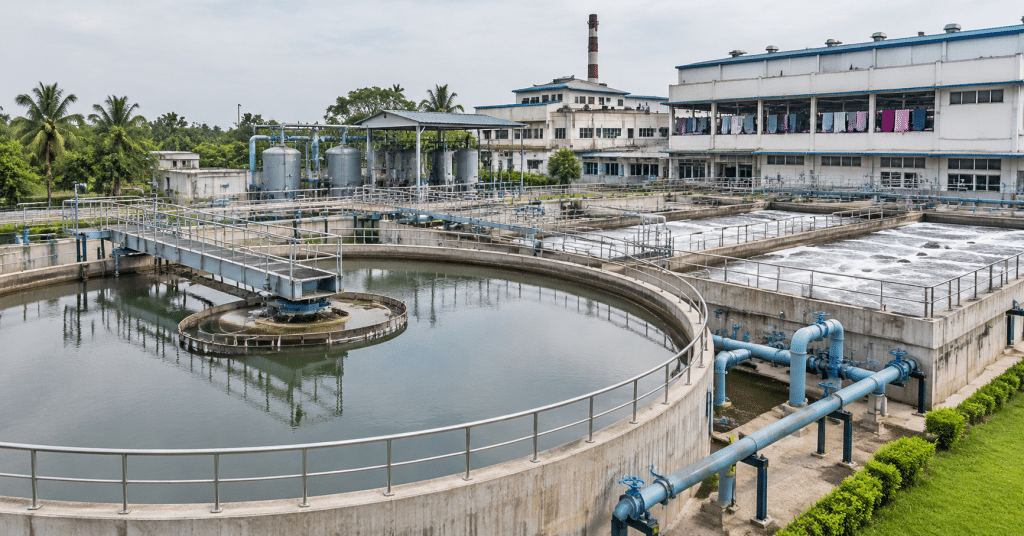
An ETP plant, short for effluent treatment plant, is a facility that cleans industrial wastewater before it is discharged or reused. It removes solids, oil, chemicals and dissolved organic waste in sequential physical, chemical and biological stages. In Bangladesh, many industries, especially textile dyeing units, must treat their wastewater to legal limits. This guide explains the meaning of an ETP plant, how it works, its five treatment stages, its equipment and the numbers that decide compliance. Readers who already have their answer and are planning a project can review the scope of ETP plant design and installation in Bangladesh. What Is an ETP Plant at a Glance? An ETP plant is a multi-stage system that treats a factory’s process wastewater so the water can be discharged safely or reused. The essentials fit into six points. Full form: Effluent Treatment Plant. What it treats: Production wastewater that carries dyes, oils, chemicals, metals and organic waste. How it works: Physical, chemical and biological treatment run one after another. The 5 stages: Preliminary, primary, secondary, tertiary and sludge management. Who needs one in Bangladesh: Industries that discharge liquid waste, with textile dyeing and chemical units in the strictest “red” category. Main legal reference: The Environment Conservation Rules, 2023. The Built, Running, Within-Limits Test for an ETP Plant The built, running, within-limits test is a three-part check that shows whether an ETP plant in Bangladesh really protects the environment. Many guides stop at “install an ETP”. In practice a plant must pass three separate tests, and many pass only one or two. Built: The plant exists, and its design received approval. Running: The plant operates every day, not only before an inspection. Within limits: The treated water meets the legal numbers for pH, BOD, COD, colour and other parameters. Recent reporting shows how often the first test fails. A BIWTA action plan, reported by Dhaka Tribune on 1 September 2026, says nearly 7,000 industrial establishments operate along the rivers around Dhaka. Around 99 per cent of them reportedly have no effluent treatment plant. The other two tests fail more quietly. A plant can be built and then left idle, or it can run and still miss the limits. The sections below return to these three tests, so a reader can judge any plant, including their own. What Is an ETP Plant? (Meaning and Key Terms) An ETP plant is a treatment facility built to clean the wastewater that one factory produces. Think of it as a gatekeeper at the factory drain. Nothing leaves until it has been checked and cleaned. Factory wastewater is a different problem from household sewage. Dye houses, laundries and chemical units add colour, heavy metals, oil and a heavy organic load. Ordinary drains and municipal sewage plants are not designed for that mix. Key terms you will meet in every ETP report These nine terms appear in almost every design drawing and test report. Term Meaning Influent Raw wastewater entering the plant. Effluent Treated water leaving the plant. Sludge Solid waste that settles out during treatment. BOD (Biochemical Oxygen Demand) Oxygen that bacteria use to break down organic matter. A higher value means dirtier water. COD (Chemical Oxygen Demand) Oxygen needed to chemically oxidise all pollutants. It is usually higher than BOD and faster to test. TSS (Total Suspended Solids) Fine solid particles floating in the water. TDS (Total Dissolved Solids) Salts and other substances dissolved in the water. pH A scale showing how acidic or alkaline the water is. DO (Dissolved Oxygen) Oxygen present in the water, which both bacteria and fish depend on. ETP vs STP vs WTP vs CETP ETP, STP, WTP and CETP are four different plants, and each one handles a different kind of water. Plant Full form Water it handles Usual operator ETP Effluent Treatment Plant Process wastewater from one factory The factory STP Sewage Treatment Plant Toilet, kitchen and washroom water Building owner or local authority WTP Water Treatment Plant Incoming raw water made fit for use The factory or facility CETP Common Effluent Treatment Plant Combined wastewater from a group of factories The industrial zone or estate A factory with a large workforce often needs more than one of these. Process water goes to the ETP, and toilet and canteen water goes to an STP. Incoming raw water usually passes through a water treatment plant first. Why Do Factories in Bangladesh Need an ETP Plant? Factories in Bangladesh need an ETP plant to protect rivers, follow the law, save water and keep export orders. Each reason is covered below. To protect rivers and fish Untreated factory water changes the chemistry of a river. It lowers the oxygen level, kills fish and carries chemicals into soil and groundwater. A research booklet from the Stockholm Environment Institute notes that fish begin to suffer when dissolved oxygen falls below about 4 to 5 mg/L. A Prothom Alo report found that oxygen in parts of Dhaka’s rivers dropped to zero in dry seasons in recent years. The scale of the problem is large. A BIWTA survey, reported by Dhaka Tribune in September 2026, counted 424 outlets sending about 330 tons of waste into the rivers around Dhaka every day. Industries accounted for nearly 60 per cent of that pollution. Globally, a 2015 UNEP report said that around 70 per cent of industrial discharge in developing countries goes untreated. To follow the law Textile dyeing and chemical processing units are classed as red category, the class that carries the greatest pollution risk. Under the earlier rules, these units had to submit an ETP plan to the Department of Environment (DoE) at the site clearance stage. They could apply for an Environmental Clearance Certificate (ECC) only after the approved ETP was built. The Environment Conservation Rules, 2023 now apply. They took effect on 5 March 2023 and replaced the 1997 rules. An RMG Bangladesh summary of the 2023 rules says they added limits for colour, COD and temperature in textile wastewater. The same summary says they require