MBBR Media Supplier in Bangladesh
Bacteria clean your wastewater, but they need a home that doesn’t wash away. MBBR media gives them one: thousands of small HDPE carriers that tumble through your bioreactor, so more biofilm works in the same tank. Supplied with fill-volume sizing and after-sales support from Techno Bangla Creation.


What Is MBBR Media?
MBBR media is a small plastic carrier that floats freely inside an aerated wastewater tank. Bacteria grow as a thin biofilm on its surfaces and consume dissolved pollutants such as organic matter and ammonia. In ETP and STP plants it lets a compact tank hold more active biomass than a plain aeration tank.
MBBR stands for moving bed biofilm reactor, a process developed in Norway in the late 1980s and early 1990s. MBBR media is not a filter that strains water, and it is not tube settler media. The carriers are a home for bacteria, while tube settler media helps solids settle.
- HDPE carrier, model PE64, slightly lighter than water
- Fills 15 to 65% of the tank volume, depending on design
- Works in aerobic tanks (air mixing) and anoxic tanks (mixers)
- Installation and after-sales support in Bangladesh
MBBR Media Specifications
- Model
- PE64
- Size
- Ø25 × 4 mm
- Material
- HDPE (high-density polyethylene)
- Surface Area
- > 1200 m²/m³ (more than 1.2 m² per litre of media)
- Density
- 0.94 ~ 0.97 g/cm³ (about 940 ~ 970 kg/m³, just under water)
- Filling (Dosing) Ratio
- 15% ~ 65% of tank volume
- Nitrification Rate
- 500 ~ 1400 g NH₄-N/m³·d (0.5 ~ 1.4 kg NH₄-N/m³·d)
- Application
- ETP, STP
- Origin
- China
Surface area and nitrification figures are supplier ratings. Ask us for the datasheet to confirm whether the area is total or protected, and which test conditions the nitrification rate used.
How Much MBBR Media Does a Tank Need?
Media quantity is tank volume multiplied by the filling ratio. Here is a worked example with the PE64 ratings above.
- Aerobic Tank (Example)
- 100 m³
- Filling Ratio Chosen
- 40% (inside the 15 ~ 65% range)
- Media Volume
- 100 × 0.40 = 40 m³
- Carrier Surface Area
- 40 × 1200 = more than 48,000 m²
- Area Per m³ of Tank
- 0.40 × 1200 = more than 480 m²/m³
- Ammonia Capacity at Rating
- 40 m³ × 500 ~ 1400 g = about 20 ~ 56 kg NH₄-N per day
This is illustrative arithmetic. It assumes the supplier ratings hold in your tank and that the nitrification rate is per m³ of media. For reference, the original K1 and K3 carriers are about 500 m²/m³ in bulk, and higher-area designs reach roughly 800 to 1200 m²/m³. A reported pilot test also found that more surface area did not always mean faster biofilm start-up, so our engineers confirm the final quantity from your pollutant load, temperature and oxygen supply.
How Does MBBR Media Work?
- Media Fills the TankCarriers take up 15 to 65% of the tank volume. A sieve at the outlet keeps them inside.
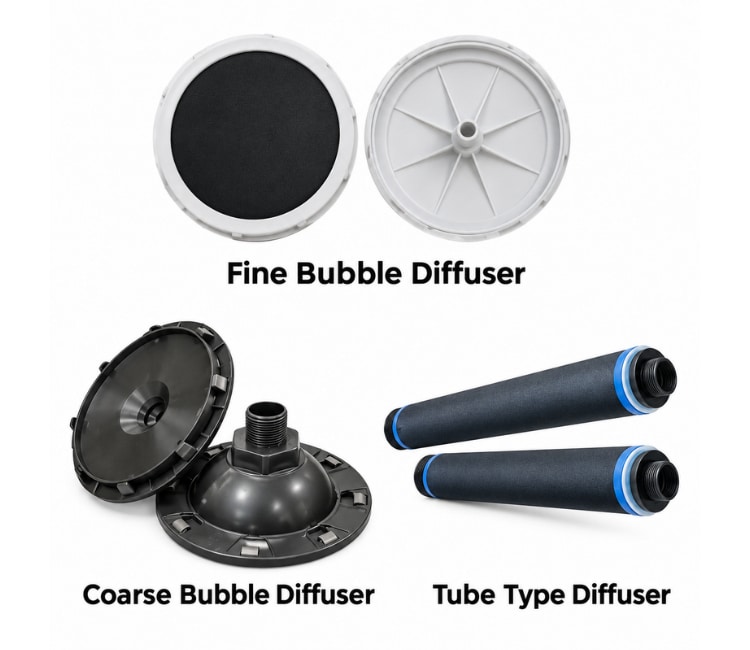
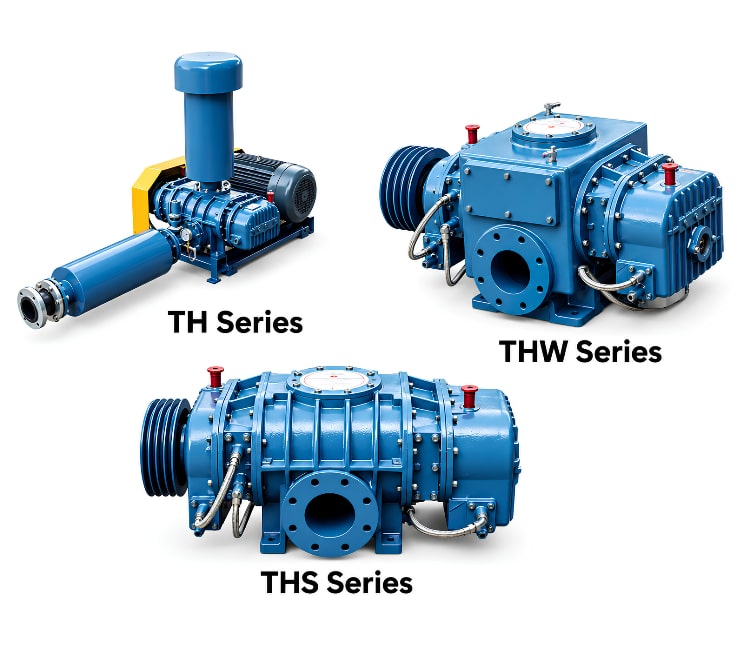
- Air Keeps Carriers MovingA blower and air diffusers supply oxygen and tumble the carriers. Anoxic tanks use mixers.
- Biofilm GrowsBacteria attach to the carrier surface. Start-up takes from a few days to several weeks.
- Biofilm Cleans the WaterBacteria consume organic matter and, in aerobic tanks, convert ammonia to nitrate.
- Treated Water Moves OnWater passes the sieve to a clarifier or polishing step, then to discharge or reuse.
Key Benefits of MBBR Media
Treatment capacity depends on how much surface the bacteria can use, and media adds that surface without adding tank volume.
- High rated surface area (above 1200 m²/m³) gives bacteria more room to grow in the same tank
- Smaller footprint than activated sludge, as reported in engineering literature
- No sludge return pumping in a pure MBBR, so operation stays simple
- Rated ammonia removal of 500 to 1400 g NH₄-N/m³·d for nitrification duty
- Adjustable filling ratio (15 to 65%), so capacity can be raised by adding media within the tank's limit
- Durable HDPE carriers with local engineering and after-sales support from Techno Bangla
Is MBBR Media Right for Your Plant?
Choose MBBR Media When
- Land or tank space is limited
- You want to add capacity to an existing aeration tank
- The wastewater has a high organic load or ammonia to remove
- You prefer simple operation without sludge return
- A clarifier or polishing step can follow the biological tank
Look at Other Options When
- You need reuse-grade water straight from the biological step. See an MBR plant.
- Colour, TDS or heavy metals are the main problem. These need chemical or advanced steps alongside biology.
- Aeration capacity is weak. Carriers need enough air to circulate.
- The wastewater is toxic enough to stop biofilm from forming
- You only need better solids settling. Try tube settler media.
Where Is MBBR Media Used?
Biological treatment of organic wastewater and ammonia in ETP and STP plants.
- Textile Dyeing ETP
- Garment Washing ETP
- Food and Beverage
- Pharmaceutical
- Paper and Chemical
- Hospital STP
- Residential and Commercial STP
- Existing Tank Upgrade
How to Choose MBBR Media
Share these details with our engineers and we will recommend a media quantity and the matching aeration.
- Pollutant load and goal. Send flow, BOD, COD and ammonia values, and say whether you need organics removal, nitrification or both. Ask for rated removal per m³ of media, not only surface area.
- Surface area type. Ask whether the area is total or protected inside the carrier. Protected area is shielded from carrier collisions, and engineers use it for design.
- Filling ratio and tank shape. Quantity is tank volume multiplied by filling ratio. Tank shape and mixing decide whether carriers circulate evenly.
- Aeration and retention sieves. The blower and diffusers must supply oxygen and keep carriers moving, and sieves must keep media in the tank.
- Discharge limits. Confirm the ECR 2023 limit for your industry with DoE before sizing. Media treats biodegradable load, so plan other steps for colour and TDS.
Frequently Asked Questions
How much MBBR media does my tank need?
It depends on your pollution load, not only the tank size. For this carrier, the fill range is 15–65% of tank volume, and more media means more biofilm area. Send your flow, BOD, COD, ammonia and tank volume, and our engineers will work out the fill volume and quote it.
Is a higher surface area always better?
No. The number that matters is the protected area inside the carrier, where biofilm is sheltered. A total area figure can overstate what works in practice, so ask for the protected or effective area. Very fine channels can also clog under heavy loading.
Will fine-cell media clog in dyeing or high-solids wastewater?
It can, if solids reach the tank. The Ø25×4 mm type has 64 narrow cells, which suits cleaner, lower-solids loads and ammonia polishing. For fibrous or heavy effluent, plan fine screening or pre-settling, and ask us whether a larger-cell model is available.
How long does MBBR media last, and does it need replacing?
Treatment doesn’t consume the carriers. Our supplier’s catalogue lists a service life above 15 years for HDPE. In practice, life depends on abrasion, broken screens and wastewater chemistry. Inspect and top up carriers during routine shutdowns.
How can I tell virgin HDPE from recycled plastic?
Ask for a material declaration and a physical sample. Compare weight per m³, wall consistency and flexibility. Recycled carriers often cost less, but the price gap alone can’t tell you what you’re buying. Reputable quotes should state the material.
How long does biofilm take to form, and how do I start up?
Catalogue data suggests about 3 to 15 days. Seed the tank with healthy activated sludge, keep the carriers moving with air or mixing, and raise the load gradually. Surface roughness also affects how fast biofilm builds.
Can I add MBBR media to my existing aeration tank?
Often yes. You need outlet retention screens, enough air to keep the carriers moving, and a settling stage downstream for sloughed biomass. We check your blower capacity and tank layout before recommending a fill.
Why do MBBR media quotes look so different?
They use different units. Retail sellers quote per piece, some importers quote per bag, and exporters quote per m³. This carrier has over 210,000 pieces per m³ in the catalogue. Ask every supplier for the price per m³, bulk density, surface area and material, then compare.