Drum & Container Pump Supplier in Bangladesh
Stop tipping heavy drums. Our drum container pump lifts acids, solvents and oils straight out of the barrel through a PVDF, PP or SS 316 tube, so transfer is cleaner, safer and ready for your ETP, WTP or plant floor.


What Is a Drum Pump?
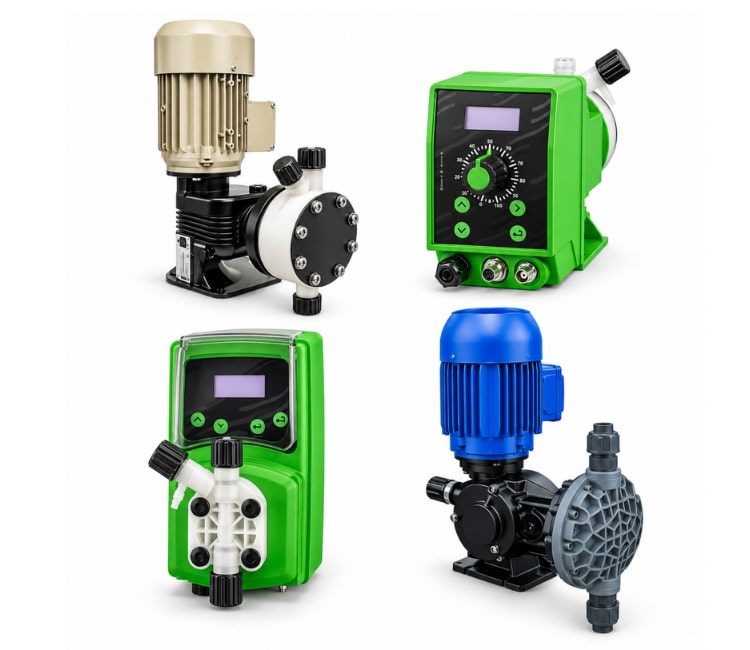
A drum container pump is a portable pump that empties drums, barrels, carboys and IBCs without tipping them. A top-mounted motor spins a shaft inside an immersion tube, lifting liquid to a discharge hose. Techno Bangla Creation supplies PVDF, PP and stainless steel 316 models in Bangladesh.
A drum pump is not a submersible, because its motor stays above the container. It is also not a metering pump: it transfers liquid, while a chemical dosing pump feeds it in controlled amounts. For fixed, continuous duty, see our air operated diaphragm pump.
- Empties drums, barrels and tanks without tipping or manual pouring
- Tube in PVDF, PP or stainless steel 316 to suit the liquid
- Handles low to high viscosity liquids, with the right model
- Installation and after-sales support in Bangladesh
Drum & Container Pump Specifications
- Type
- Portable drum (barrel) pump: motor, immersion tube and pump section
- Materials
- PVDF, PP, Stainless Steel 316
- Liquids
- High to low viscosity liquids, flammable liquids, oil, hydrochloric acid, sulfuric acid and other chemicals
- Origin
- China
- Drive, flow, viscosity limit
- Depends on the model. Send your liquid and duty and we confirm the datasheet
- Seals and impeller
- Depends on the model and the liquid. Confirm on the datasheet
- Tube length (rule of thumb)
- About 100 cm (roughly 39 in) for a standard 200 L drum (about 55 US gal)
The tube length row is a general guide for standard drums, not a model rating. Exact flow, motor, viscosity limit and materials depend on the model you select, so we confirm them from your liquid and container.
How a Drum Pump Works
- Tube Goes InThe tube goes through the drum opening and a barrel adapter holds it in place. A standard 200 L drum uses a tube of about 100 cm.
- Motor Turns the ShaftThe motor sits on top, outside the container, and turns a vertical shaft inside the tube.
- Pump Section Draws LiquidThe impeller or pumping element at the bottom of the tube pulls liquid in from near the base of the drum.
- Liquid Rises Up the TubeThe liquid climbs between the shaft sleeve and the outer tube to the discharge port at the top.
- Hose Fills Your TankA hose carries the liquid to a day tank or process tank, often feeding a dosing pump.
Key Benefits
Moving chemicals safely starts with not lifting or tipping the drum.
- Empties drums without tipping, which cuts spill risk and manual handling
- Motor stays above the container, so only the tube and pump section touch the liquid
- Light and portable, and the motor can usually be moved to another tube
- Tube in PVDF, PP or stainless steel 316 to match acids, corrosives, oils and solvents
- Suited to low to high viscosity liquids, depending on the model
- Local engineering and after-sales support from Techno Bangla
Which Pump Fits Your Transfer Job?
Choose a Drum Pump When
- Liquid arrives in drums, barrels, carboys or IBCs
- You fill a day tank or dosing tank by hand-held transfer
- You want to avoid tipping or pouring chemicals
- The pump must move between several containers
- The liquid needs a PVDF, PP or stainless steel tube
Choose Another Pump When
- You need exact metered feed. See our chemical dosing pump
- Transfer is continuous or fixed-position, or the liquid is sludge. See the diaphragm pump
- The pump may run dry, because most drum pumps must not
- The liquid is thicker than the model's viscosity limit
- It carries abrasive solids or slurry
Where Drum Pumps Are Used
Any site that buys liquid in drums and needs to move it safely.
- Chemical Transfer
- Hydrochloric Acid
- Sulfuric Acid
- Flammable Liquids
- Oil Transfer
- ETP pH Correction Chemicals
- Coagulant Make-Up Tanks
- WTP Chemical Feed
- Textile and Dyeing Plants
How to Choose the Right Drum Pump
Hydrochloric acid needs PVDF. Stainless steel 316 is not recommended because chlorides attack it, so always confirm the chemical and its concentration first.
- Liquid and materials. Give the chemical name and strength. Check the chemical resistance chart for the tube, seal and impeller. Do not assume one tube fits every chemical.
- Viscosity. Centrifugal-type drum pumps suit thin to medium liquids, and many sets list limits of roughly 400 to 1000 mPa·s. Thicker liquids need a screw-type model.
- Flammable or not. Flammable liquids need a spark-safe set: an ATEX-approved air motor or flameproof electric motor, a stainless steel tube and an earthing cable. Polypropylene tubes are not for flammables.
- Container and tube length. A standard 200 L drum takes a tube of about 100 cm. Tell us if you use 20 L pails, carboys or IBCs.
- Temperature and protection. In Bangladesh's warm stores, check the tube's temperature limit. One maker lists about 54°C for polypropylene and about 82°C for 316 stainless steel. Never run the pump dry.
Frequently Asked Questions
What is a drum container pump used for?
It moves liquid out of 200 L drums, pails, carboys and IBCs without lifting or pouring. Typical jobs are acid and solvent transfer, oil handling, and filling make-up tanks for ETP and WTP chemicals.
Is a drum pump the same as a barrel pump?
Yes, they are the same family of pump, and the name changes with the trade. In the Bangladesh listings I reviewed, “barrel pump” mostly means fuel and oil sets. A chemical drum pump is chosen by tube and seal material instead.
Should I choose an electric or an air-operated drum pump?
Electric models give steady flow and simple setup on a single-phase supply. Air-operated models suit hazardous or flammable zones but need a compressed-air line. Tell us your area classification and we will match the drive.
Can a drum container pump run dry?
Avoid it. Many designs rely on the pumped liquid to cool and lubricate the shaft bearing, so running dry shortens life. Stop the pump as the drum nears empty, and check the model datasheet for dry-run limits.
Can I pump hydrochloric acid with a stainless steel drum pump?
Generally no. Chlorides attack stainless steel, including 316, so PVDF is the usual choice for hydrochloric acid. Confirm the concentration and temperature against the chemical resistance chart before ordering.
How long should the tube be for a 200-litre drum?
About 100 cm is the standard rule of thumb, reaching close to the bottom so little liquid is left behind. For pails or carboys you need a shorter tube. Also check the bung opening size, because the tube must pass through it.
Can a drum pump handle ETP and WTP chemicals?
Yes, with matched materials. PP and PVDF tubes are commonly used for many water-treatment chemicals such as caustic soda, alum and ferrous sulfate. The exact seal and impeller depend on the chemical, so we confirm each one first.
What do I need to send for a drum container pump quotation?
Send five details: the liquid and its strength, the temperature, the viscosity, the container size and bung opening, and your power source (220 V single-phase or compressed air). Add whether the area is hazardous, and we will return a datasheet and price.