Sunshine Filter Press Supplier in Bangladesh
Sunshine filter presses for sludge dewatering and solid-liquid separation in ETP and STP plants, from general hydraulic to programmable automatic and membrane types, supplied with installation and after-sales support by Techno Bangla Creation.

What Is a Filter Press?
A filter press is a batch machine that separates solids from liquid under pressure. It holds a series of cloth-covered plates pressed together. Sludge is pumped into the chambers between the plates, the water (filtrate) passes through the cloth, and a solid filter cake stays behind. In ETP and STP plants it is used for sludge dewatering.
A filter press is not a screw press. A filter press works in batches and presses the cake between plates, while a screw press dewaters continuously with a rotating screw. For the continuous type, see our screw press page.
- Four types: general hydraulic, programmable automatic, high-pressure PP membrane and high-pressure membrane
- Solid-liquid separation for ETP, STP, oil mills, paper mills, coal mining and iron recovery
- Membrane types squeeze the cake again for a drier result
- Installation and after-sales support in Bangladesh
Filter Press Specifications
- Type
- Filter press with a series of cloth filters fixed to frames, for filtration of liquid under pressure
- Function
- Solid and liquid separation, sludge drying
- Models
- General Hydraulic, Programmable Automatic, High Pressure PP Membrane, High Pressure Membrane
- Application
- ETP, STP, Oil Mills, Paper Mill, Coal Mining, Iron Recovery
- Brand
- Sunshine
- Origin
- China
Filtration area, plate size, number of chambers, pressure and cake dryness depend on the model and your sludge. Send us your sludge data and our engineers will confirm the right size.
How a Filter Press Works
- Plates CloseA hydraulic cylinder presses the cloth-covered plates together into sealed chambers.
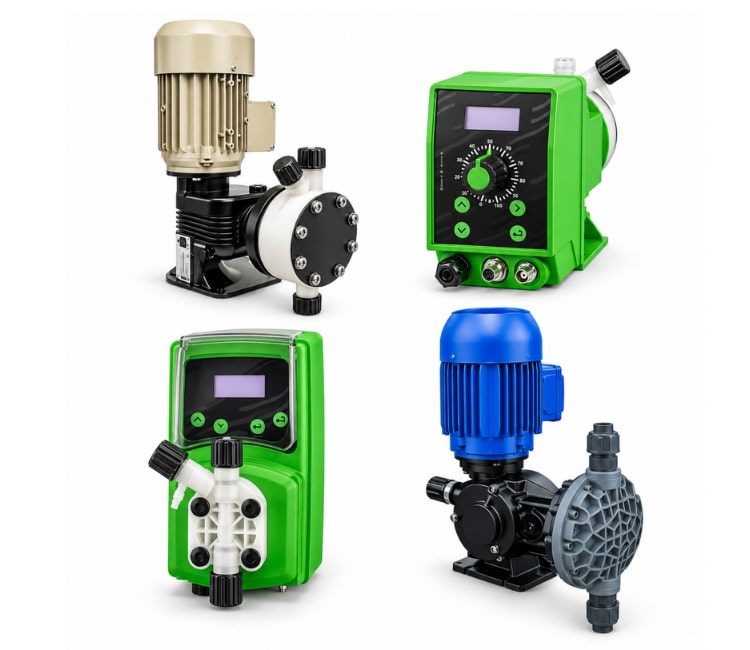
- Sludge Is Pumped InA feed pump, often an air operated diaphragm pump, fills the chambers under pressure.
- Filtrate DrainsWater passes through the cloth and leaves by the filtrate ports while solids build a cake on the cloth.
- Membrane Squeeze (Membrane Types)Plates inflate with water or air and press the cake again to push out more liquid.
- Press Opens, Cake DropsThe plates separate and the solid cake falls out. The cycle then repeats.
Key Benefits
Sludge is costly to store, haul and dispose of. Removing water is the simplest way to shrink it.
- Drier cake than belt presses in many cases, which means less volume to haul
- Four press types, from general hydraulic to programmable automatic and membrane
- Membrane models squeeze the cake again, which reports link to drier cake and shorter cycles
- Clear filtrate that can be sent back to the ETP for further treatment
- Works with many sludges: ETP, STP, oil mill, paper mill, coal and iron recovery
- Local engineering and after-sales support from Techno Bangla
Which Filter Press Type Fits Your Plant?
Choose a Membrane Press When
- Disposal cost is high and every point of cake dryness counts
- You want shorter press cycles and steady dryness from batch to batch
- Compressed air or a water supply for membrane squeeze is available
- You accept that membrane plates flex each cycle and may wear sooner
- Pick the high-pressure PP membrane or high-pressure membrane model
Choose a General Hydraulic Press When
- The sludge volume is small to medium and a simple machine is enough
- You prefer fewer parts to maintain
- Cake dryness from feed pressure alone meets your disposal needs
- Need less manual work? Ask about the programmable automatic model with plate shifting and cloth washing
Where Filter Presses Are Used
Any process that produces a slurry or sludge that must be separated into solid cake and liquid.
- ETP Sludge
- STP Sludge
- Textile Dyeing Sludge
- Oil Mills
- Paper Mill
- Coal Mining
- Iron Recovery
- Chemical Precipitation Sludge
How to Choose the Right Filter Press
Share these details with our engineers and we will recommend a suitable model and size.
- Sludge type and daily load. Give sludge volume, solids percentage and source. Dry solids per day sets the chamber volume and number of plates.
- Target cake dryness. Ask what your disposal route needs. Cake dryness and cycle time come from lab or pilot tests, not from a single catalog figure.
- Pressure and type. Feed pressures of about 7 to 15 bar are common, with high-pressure designs reaching 15 to 30 bar (about 1.5 to 3 MPa). Membrane squeeze adds extra pressure.
- Feed pump and air. Match the pump to the press. High-pressure diaphragm pumps are widely used and need enough compressed air.
- Conditioning and cloth care. Lime, ferric salts or polymer prepare the sludge. A change of polymer can give sloppy cake, and dirty cloth will not build good cake.
Frequently Asked Questions
Which company makes the Sunshine filter press, and where is it from?
Sunshine is a Chinese filter press brand, and the unit on this page is listed with origin China. Several unrelated companies use the name Sunshine, so always confirm the exact maker, model series and certificates on your quotation. Techno Bangla Creation supplies the press in Bangladesh with installation and after-sales support.
How do I size a Sunshine filter press for my sludge?
Work from dry solids per day. Divide dry solids by the cake's solids percentage to get wet cake, then divide by cake density to get cake volume per day. Example: 1,000 kg dry solids per day at 30% cake solids is about 3,333 kg of cake, or about 3 m³ at 1,100 kg/m³. With 3 batches per day, the chambers must hold about 1 m³ of cake per batch. A lab test on your sludge sets the real figures.
Why is my filter press cake wet, sloppy or sticking to the cloth?
Check five things in order: the sludge conditioning (a polymer or lime change often ruins cake), the filter cloth (blinded cloth will not build cake), feed time and pressure, leaking plates, and plates that were not fully closed. Fix conditioning and cloth first, because they cause most wet-cake problems.
Should I choose a programmable automatic press or a general hydraulic press?
Choose the programmable automatic press when you press every day and want less manual work, because it handles plate shifting and cloth washing automatically. Choose the general hydraulic press for small or occasional sludge volumes, where a simpler machine with fewer parts is easier to maintain. Membrane models suit plants where disposal cost makes drier cake worth the extra equipment.
Filter press or screw press for textile ETP sludge?
A filter press runs in batches and is usually chosen when drier cake matters most and sludge volume is steady. A screw press runs continuously with a rotating screw and suits plants that want less operator time and a smaller footprint. Our screw press is listed from 5 kg/h to 640 kg/h, so very large daily loads may favour a press. Share your sludge and we will compare both.
What does a filter press need on site?
A level, load-bearing floor and headroom to open the plates, a power supply for the hydraulic unit, compressed air or water if you choose a membrane press, a feed pump and feed tank, a drain for filtrate, and a way to collect cake such as a trolley or skip. Our engineers check these during the site visit.
What happens to the filtrate and the cake?
The filtrate (the water that passes through the cloth) usually goes back to the ETP inlet for further treatment. The cake is handled as sludge waste and disposed of according to your site's rules and your disposal contractor's requirements. Drier cake means less weight to haul.
What should I send to get a Sunshine filter press quotation?
Send your sludge type and source, daily sludge volume, solids percentage, target cake dryness, available compressed air and power, and the floor space you have. If possible, send a sludge sample so we can test dewatering. Our Dhaka engineers reply with a free quotation covering the press, feed pump and installation. Call +880 1716 825385 or email marketing@technocreationbd.com.