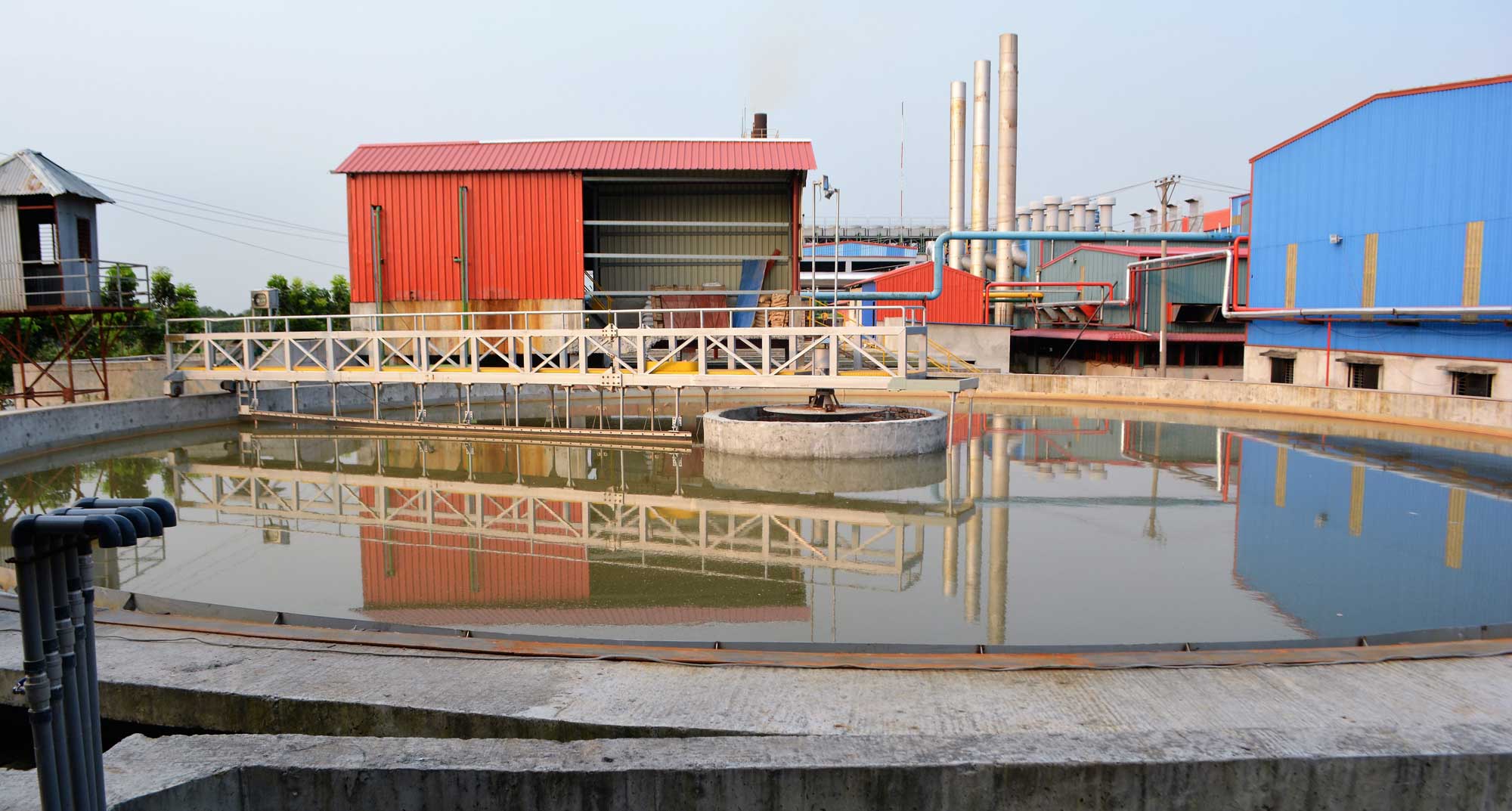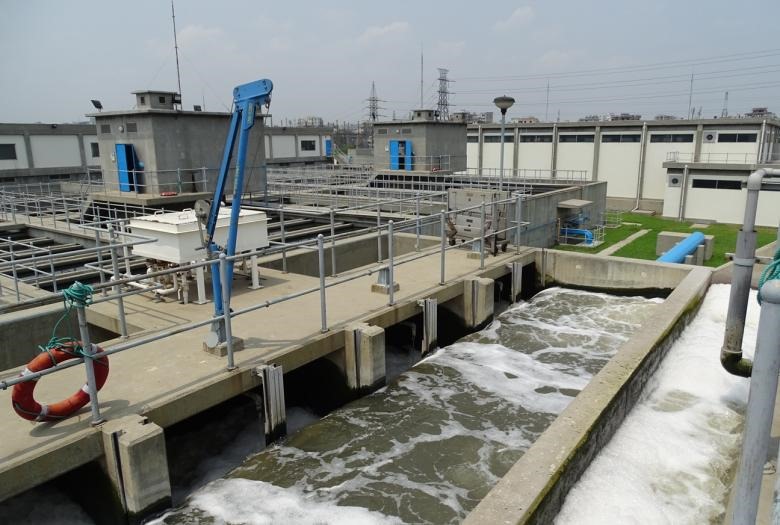
MBR Plant in Bangladesh
Compact membrane bioreactor (MBR) plants for ETP and STP that replace the clarifier with a membrane, giving clear, low-solids treated water that is ready for reuse or RO. Designed, installed and supported by Techno Bangla Creation.

What Is an MBR Plant?
An MBR (membrane bioreactor) plant is a wastewater treatment system that pairs a biological tank, where bacteria consume pollutants, with a microfiltration or ultrafiltration membrane that separates clean water from the biomass. The membrane replaces the secondary clarifier, so the plant is compact and delivers clear, low-solids treated water.
An MBR is not the same as an MBBR. An MBBR grows bacteria on floating carriers and still needs a clarifier, while an MBR holds the solids back with a membrane. For the carrier-based option, see our MBBR media page.
- Biological treatment plus membrane filtration in one process
- Suited to ETP, STP, hospital and reuse-focused projects
- Works with a complete ETP or STP treatment train
- Installation and after-sales support in Bangladesh
What Are Typical MBR Design Values?
General engineering ranges for membrane bioreactors, so you can read a quotation with confidence.
- Membrane Type
- Microfiltration or ultrafiltration (ultrafiltration is often preferred for lower fouling)
- Pore Size
- Roughly 0.01 ~ 0.4 µm across ultrafiltration and microfiltration membranes
- Membrane Shapes
- Hollow fibre, flat sheet, tubular
- Configuration
- Submerged (suction) or side-stream (pressure-driven)
- Biomass (MLSS)
- About 8,000 ~ 12,000 mg/L, against roughly 3,000 mg/L in conventional activated sludge
- Design Flux
- About 10 ~ 25 LMH (litres per m² of membrane per hour), lower for hard industrial wastewater
- Treated Water Solids
- TSS typically below 5 mg/L, against about 20 ~ 50 mg/L from a clarifier
- Membrane Life
- Case reports range from about 5 to 13 years, depending on wastewater and cleaning
These are published ranges, not guarantees for our plants. Membrane make, flux, MLSS and expected life depend on your wastewater and the exact design, so we confirm them on the datasheet of the selected system.
How Does an MBR Plant Work?
A typical MBR treatment train, from raw wastewater to treated water.
- ScreeningFine screens remove hair, fibre and debris that could damage the membranes.
- EqualizationA tank evens out flow and strength so the biology receives a steady load.
- Anoxic TankBacteria use nitrate here, which helps remove nitrogen when the design needs it.
- Aerobic BioreactorA blower and air diffusers supply oxygen. Bacteria consume organic matter and convert ammonia.
- Membrane FiltrationSuction or pressure pulls water through the membrane. Bacteria and solids stay in the tank.
- Air ScouringCoarse air bubbles sweep the membrane surface and slow the build-up of a fouling layer.
- CleaningBackwash and chemical clean-in-place restore membrane flow. Dosing pumps feed the cleaning chemicals.
- Disinfection or PolishingTreated water may get light disinfection. Reuse targets may add RO, as in a water treatment plant.
- Sludge HandlingExcess sludge is dewatered with a filter press or screw press.
Which MBR Configuration Fits Your Plant?
The membrane can sit inside the biological system or outside it. Each layout suits different projects.
Submerged MBR
- Membranes sit in the bioreactor or in a separate membrane tank
- Suction draws water through, so pumping pressure stays low
- Commonly chosen for medium and large plants
- Used in many sewage and industrial plants
Side-Stream MBR
- Mixed liquor is pumped past membranes outside the tank
- Pressure-driven, with tubular or similar membranes
- Often used for smaller plants and tough industrial wastewater
- Needs more pumping energy than a submerged layout
Hybrid MBBR + MBR
- Floating carriers add attached biomass ahead of the membrane
- Studied in pilot plants for organic and nitrogen removal
- Needs careful design so carriers do not harm the membranes
- See MBBR media for the carrier side
How Much Membrane Area Does an MBR Plant Need?
Membrane area equals daily flow divided by design flux and by hours of filtration. Two worked examples show how wastewater type changes the answer.
- Sewage Example
- 1,000 m³/day at 18 LMH design flux
- Sewage Area
- 1,000,000 L ÷ 24 h ÷ 18 LMH = about 2,315 m², or about 2,660 m² with a 15% margin
- Textile Example
- 2,500 m³/day at 15 LMH design flux
- Textile Area
- 2,500,000 L ÷ 24 h ÷ 15 LMH = about 6,944 m², or about 8,333 m² with a 20% margin
Illustrative arithmetic only. It assumes 24 hours of filtration. Harder wastewater needs a lower flux and so more membrane, which raises cost. Our engineers set the final flux from your wastewater data, temperature and cleaning plan.
What Are the Benefits of an MBR Plant?
The membrane is a physical barrier, so treated water quality does not depend on how well sludge settles.
- Smaller footprint: no large clarifier, and higher biomass in a smaller tank, up to about 50% less space as reported
- Clear treated water with very low suspended solids and reduced bacteria and virus content
- Treated water suits discharge to sensitive water bodies and non-potable reuse such as irrigation, flushing and utilities
- Good feed for reverse osmosis when factories want to recycle water
- Automation friendly, so fewer operator interventions at small or remote sites
- Reported stable output under changing load, with local engineering and after-sales support from Techno Bangla
Is an MBR Plant Right for Your Factory?
Choose an MBR Plant When
- You plan to reuse treated water or feed an RO system
- Land is limited and a clarifier will not fit
- Your discharge limits or buyer standards are strict
- You want high automation and steady treated water quality
- The budget covers membranes, cleaning and later replacement
Look at Other Options When
- Space is plentiful and basic limits are easy to meet. A conventional plant or MBBR may cost less.
- Salt (TDS) or colour is the main problem. MBR alone does not remove dissolved salts.
- The wastewater carries heavy oil, grease or scaling hardness without pre-treatment
- You cannot support routine membrane cleaning and monitoring
- Capital cost is the main limit. MBR usually costs more upfront.
Where Are MBR Plants Used?
Sites that need compact treatment, strict limits or water reuse.
- Textile Dyeing and Washing
- Garment Factories
- Pharmaceutical
- Food and Beverage
- Hospitals
- Residential and Commercial STP
- Hotels and Resorts
- Industrial and Export Zones
- Landfill Leachate
- Municipal Wastewater
What Do We Need to Design Your MBR Plant?
Share these details with our engineers and we will recommend a layout, membrane area and budget range.
- Flow. Average and peak flow in m³/day, and the hours the plant runs.
- Wastewater quality. BOD, COD, TSS, TDS, pH, oil and grease, colour and temperature. Lab results are best.
- Treated water goal. The ECR 2023 limit for your industry, a buyer standard, or reuse and RO feed quality.
- Site and tanks. Available land, any existing tanks and the pre-treatment already in place.
- Utilities and operation. Power supply, cleaning chemical storage and who will run the plant.
Frequently Asked Questions
MBR or MBBR plus clarifier: which treatment train is better?
It depends on what you need from the water. An MBBR with a clarifier and a polishing filter costs less to build and is simpler to run, and it is enough when discharge limits are basic and space is available. An MBR folds the clarifier and the filter into one membrane step, so it gives clearer water in a smaller footprint and a cleaner feed for RO. Choose MBR when you plan to reuse water, space is tight or limits are strict. Choose MBBR when budget and simplicity matter most.
What causes membrane fouling in an MBR plant, and how do I prevent it?
The usual causes are oil and grease, hair and fibres, running above the design flux, very high sludge concentration and sudden temperature swings. Pilot studies have linked temperature shocks to faster fouling. Prevention is mostly design and discipline: fine screening, oil removal, equalisation, steady flow, air scouring, regular backwash and a scheduled chemical clean-in-place. Keep the flux within the supplier's rating.
Hollow fibre or flat sheet membranes: which is better for my plant?
Neither is better everywhere. Hollow fibre packs more membrane area into a tank and can be backwashed, but long fibres and hair can tangle and clog bundles. Flat sheet is mechanically rugged and tolerant of fibres, but needs more space per square metre of membrane. Published comparisons also suggest that overall plant design and control affect energy use more than membrane shape does. Tell us your wastewater and we will recommend a type.
How much electricity does an MBR plant use, and what else adds to running cost?
Optimised full-scale municipal MBRs report roughly 0.5 to 0.65 kWh per m3 treated, and one audit measured 0.64 kWh/m3 against 0.3 kWh/m3 for conventional activated sludge. Most of the extra energy goes to air scouring that keeps the membrane clean. Add cleaning chemicals, operator time and eventual membrane replacement. Ask any supplier for a guaranteed kWh/m3 and the air-scouring strategy.
What pre-treatment does an MBR need for textile wastewater, and what will it not remove?
Textile wastewater needs fine screening for lint and fibre, oil and grease removal, equalisation and cooling, because membranes have a rated temperature range (flat-sheet PVDF modules are often rated about 15 to 40 degrees C). An MBR holds back bacteria and solids and cut COD and BOD strongly in a Dhaka bench trial, but it does not remove dissolved salts and may not remove all colour. For reuse, add RO or an oxidation step.
Can I upgrade my existing ETP or STP to an MBR?
Often yes. A common route is to replace the clarifier with a membrane tank and raise the biomass in the existing aeration tank. An engineer must check aeration capacity, available tank volume, fine screening, power supply and the sludge handling you already have. Send us your tank drawings and wastewater data and we will assess whether a retrofit or a new plant makes more sense.
Does an MBR remove bacteria and viruses, and do I still need disinfection?
MBR membranes are a physical barrier and remove most bacteria. A full-scale MBR with 0.04 micron membranes removed about 4 to 5.5 log of adenovirus and norovirus, but reported virus removal ranges from roughly 0.5 to 6 log depending on membrane, design and operation, and one cold-climate pilot achieved only 1.8 to 3.0 log. For hospitals and reuse, keep a disinfection step and follow the rules for your reuse application.
How long does an MBR take to start up, and who can operate it?
Start-up is gradual. The tank is seeded with activated sludge and the biomass builds towards the design level over several weeks, with flow raised step by step while the membranes run. Day-to-day operation is largely automated, but a trained operator must watch transmembrane pressure, flux, air scouring, dissolved oxygen and the cleaning schedule. We commission the plant and train your team.