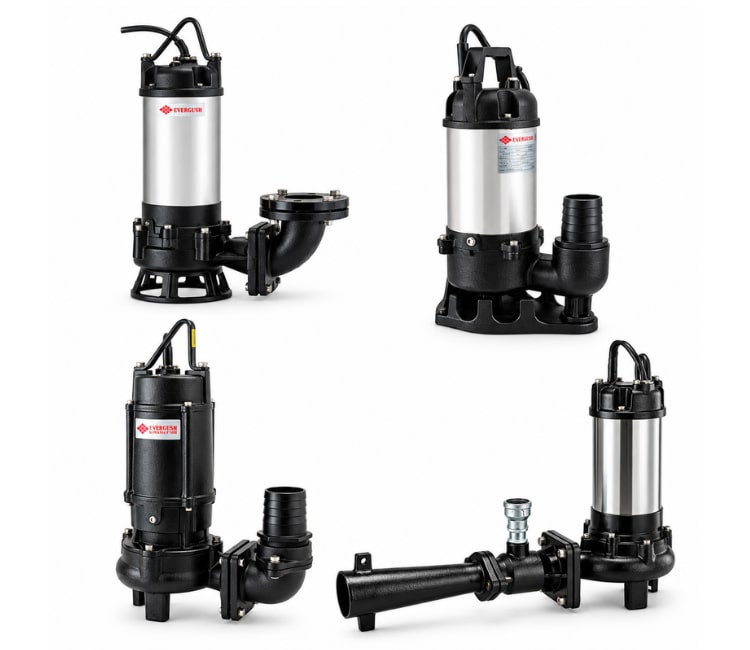
EAF Heavy Duty Submersible Sewage Pumps in BD
Sewage never takes a day off, and neither should your pump. EAF heavy duty submersible sewage pumps sit in the sump with an IP68 dry motor, a silicon carbide dual seal, and an overload protector that steps in before a clog becomes a shutdown. Choose 2–8 inch discharge, up to 40 m head, and up to 417 m³/hr, with installation and after-sales support from Techno Bangla Creation.

What Makes an EAF Pump Heavy Duty?
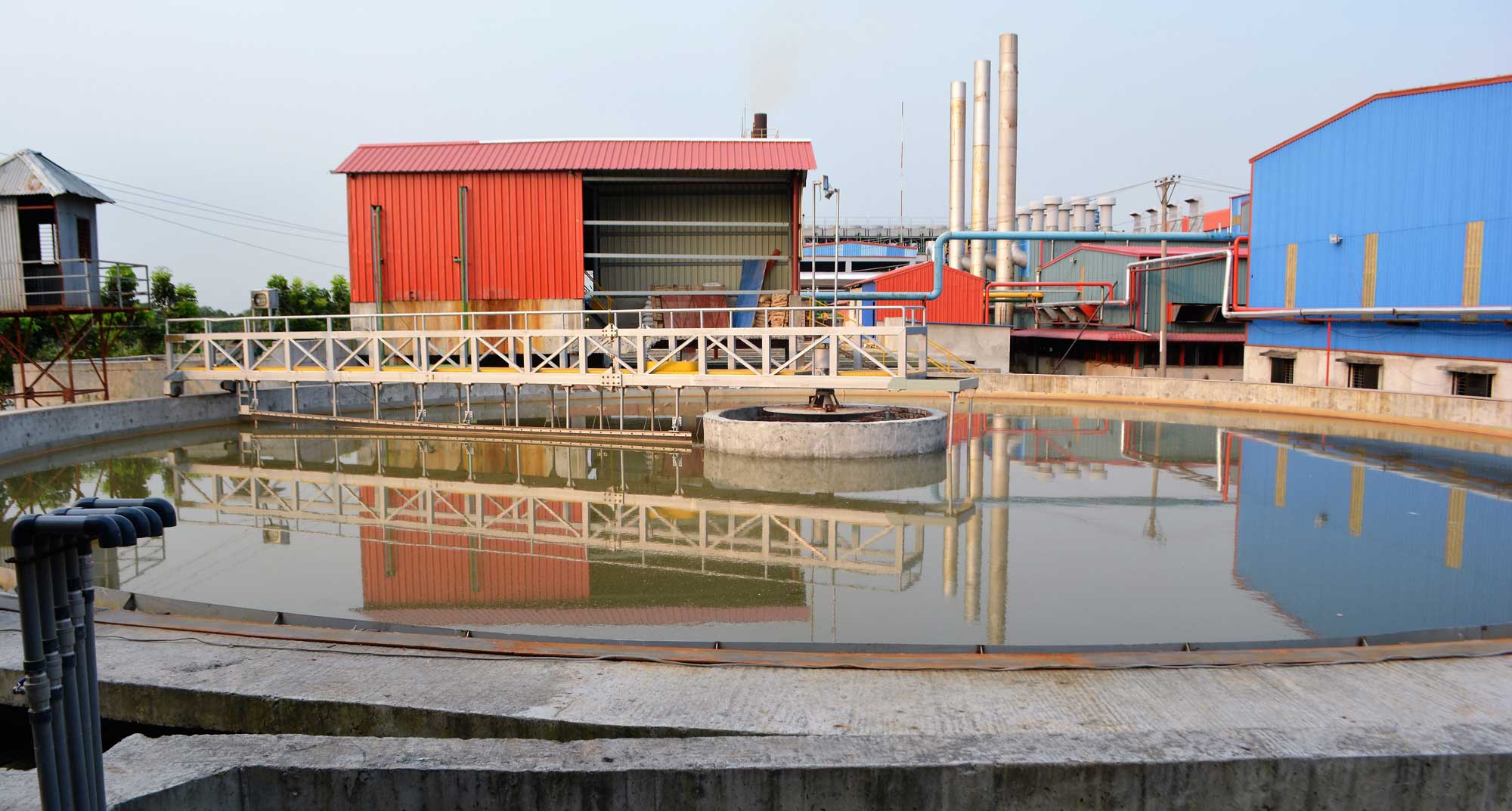
In a sewage pit, the first parts to fail are the motor, the seal, and the cable. EAF builds those toughest: a sealed dry motor with class F insulation, a dual-enclosed silicon carbide seal, epoxy-impregnated wiring, and a thick epoxy-coated body. That makes it a sensible pick for ETP and STP sumps, factory drainage, and building sewage.
A sewage pump is not a clean-water drainage pump, because sewage carries solids, rags and fibres. For aeration duty see our submersible sewage pump and aerator. For an above-ground option see our self-priming centrifugal pump.
- Dry motor, 3-phase, 2 or 4 pole, with IP68 protection
- Silicon carbide seal in a dual-enclosed structure
- Overload protector shuts the pump off automatically
- Installation and after-sales support in Bangladesh
EAF Submersible Sewage Pump Specifications
- Series
- EAF heavy duty submersible sewage pump
- Power (50 Hz)
- 2 ~ 7.5 HP (about 1.5 ~ 5.6 kW). This is the range for Bangladesh's 50 Hz supply
- Power (60 Hz)
- 2 ~ 20 HP (about 1.5 ~ 14.9 kW)
- Voltage (50 Hz)
- Single phase 220 ~ 240 V, three phase 380 ~ 415 V
- Motor
- Dry motor, 3-phase, 2 pole or 4 pole
- Motor Protection
- IP68 enclosure, class F insulation, overload protector
- Discharge
- 2" ~ 8" (about 50 ~ 200 mm)
- Max. Head
- 40 m (about 392 kPa or 3.9 bar)
- Max. Capacity
- 6950 LPM (417 m³/hr, about 116 L/s)
- Shaft Seal
- Silicon carbide, dual-enclosed structure with diaphragm
- Cable and Coating
- Weatherproof, waterproof cable with epoxy-impregnated wiring. Thick epoxy coating on the pump
Maximum head and capacity belong to the largest models, and the 50 Hz range is smaller than the 60 Hz range. Impeller type, solids passage and materials depend on the model, so we confirm them on the datasheet for your duty point.
How Does a Submersible Sewage Pump Work?
- Sewage Fills the SumpWastewater flows into the wet well or collection tank and the level rises.
- Level Control Starts the PumpA float switch or level sensor starts the pump at the set level and stops it near the bottom.
- Impeller Moves the LiquidThe motor spins the impeller, which pushes sewage and solids through the pump casing.
- Seals Protect the MotorThe shaft seal and sealed cable entry keep sewage out of the motor housing.
- Discharge Line Carries It OnPiping sends the flow to the sewage treatment plant or ETP. The overload protector stops the pump if it blocks or voltage drops.
Key Benefits
A sewage pump runs in the hardest conditions on a plant, so protection features matter.
- IP68 dry motor with class F insulation, built to resist heat and moisture
- Waterproof cable with epoxy-impregnated wiring to keep moisture out of the motor
- Silicon carbide seal in a dual-enclosed structure, suited to muddy liquid and long running
- Overload protector switches the pump off on low voltage, a plugged impeller or low water level
- Thick epoxy coating, which the manufacturer states resists corrosion and rust better than common paint
- Installs in the wet well with no suction piping or pump room
Is an EAF Submersible Sewage Pump Right for Your Site?
Choose an EAF Submersible When
- The pump will sit in a sump, wet well or tank
- You have no space or budget for a dry pit or pump room
- Flow and head fall inside 2" to 8" discharge and 40 m
- The duty is sewage, effluent or drainage with solids
- Single phase or three phase 50 Hz power is available
Choose Another Pump When
- Easy inspection while running matters most. Consider a self-priming pump
- Heavy rags or stringy waste keep clogging. A vortex impeller may fit, though sources report 25 to 30% lower efficiency
- Pumping through a small-bore, high-lift line often calls for a grinder pump
- You need over 40 m head or a motor above 7.5 HP on 50 Hz
- The liquid is very hot, strongly acidic or highly abrasive. Confirm materials first
Where Are EAF Submersible Sewage Pumps Used?
Sumps and tanks that collect sewage, effluent or drainage water.
- ETP and STP Sumps
- Building Wastewater
- Sanitary Sewer
- Dyeing and Textile Drainage
- Paper and Leather Industry
- Food Processing
- Iron and Steel Industry
- Fishery and Dairy Farm
- Piggery and Animal Husbandry
- Fecal Sewage Tanks
- Community Markets
How to Choose the Right Submersible Sewage Pump
Share these details with our engineers and we will recommend a suitable model and size.
- Flow and total head. Give peak flow and the total head, which is the lift plus pipe and fitting losses. The duty point must sit inside the pump curve.
- Power supply. Bangladesh runs on 50 Hz, where EAF covers 2 to 7.5 HP. Ask for 50 Hz performance, because the 60 Hz range is larger.
- Solids and rags. Non-clog impellers are often rated for about 3 inch solids. Tell us about rags, fibre, grit or sludge in your wastewater.
- Pipe velocity. Design guides suggest at least 0.6 to 0.9 m/s in the rising main. That means about 17 to 25 m³/hr in a 100 mm pipe.
- Wet well, starts and standby. Guides commonly cap starts at about 6 to 15 per hour by motor size. Use a duty and standby pair so one failure does not stop the plant.
Frequently Asked Questions
What makes an EAF submersible sewage pump “heavy duty”?
The parts that fail first in a sewage pit are built toughest. These are a sealed IP68 dry motor with class F insulation, a dual-enclosed silicon carbide seal, epoxy-impregnated waterproof cable, and a thick epoxy-coated body. An overload protector adds a last line of defence by cutting power when the impeller jams or voltage drops.
How much sewage can an EAF pump move per hour?
The largest EAF models reach 417 m³/hr (6,950 LPM) at heads up to 40 m, with 2" to 8" discharge. Smaller models move less. Share your peak flow and total head and we will match the right model.
Which EAF motor sizes run on Bangladesh’s 50 Hz power?
On 50 Hz, EAF motors cover 2 to 7.5 HP (about 1.5 to 5.6 kW). They come in single phase 220–240 V and three phase 380–415 V. The 2 to 20 HP range applies to 60 Hz, so always ask for the 50 Hz performance curve before ordering.
Will rags, plastic or fibre clog an EAF pump?
Non-clog sewage impellers are commonly designed for solids of about 3 inches. Stringy rags and fibre can still wrap an impeller. Tell us what your wastewater carries and we will confirm impeller type and solids passage on the datasheet for the exact model. A bar screen before the sump also helps.
What happens if the sump runs low or the voltage drops?
The overload protector switches the pump off on low voltage, a plugged impeller, or low water level. Dry running still wears seals, so keep your float switch or level sensor working.
Should I install one EAF pump or a duty-standby pair?
For ETP, STP, and building sewage, a duty-standby pair is the safer design. If one pump trips or needs service, the other keeps the plant running, and alternating them shares the wear. A single pump suits small, non-critical sumps.
How long does a submersible sewage pump last?
It depends on duty, solids, and servicing more than on the label. Residential guides put sewage pumps at roughly 7 to 10 years, and well-kept submersibles can pass 15. Gritty industrial sumps with heavy cycling need shorter inspection intervals, so plan a lift-and-inspect routine.
What should I send to get an EAF pump quotation?
Send five details: peak flow, total head (lift plus pipe losses), power supply (single or three phase, 50 Hz), wastewater type, and sump size. Our engineers will shortlist a model and reply with a free quotation.