EF Series Submersible Sewage PumpSupplier in Bangladesh
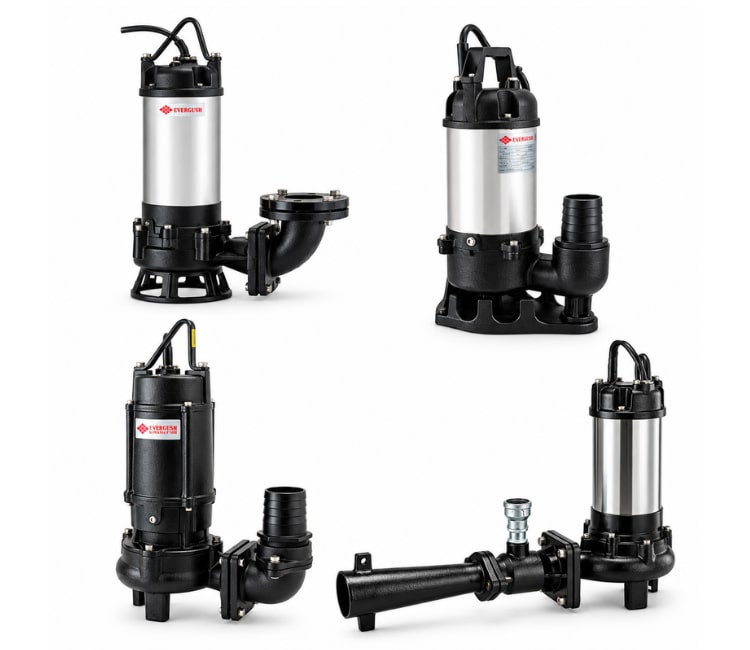
The EF series is a range of non-clog submersible sewage pumps from 0.5 to 15 HP (0.37 to 11 kW), with an IP68 class F motor, a double mechanical seal, a motor overload protector and an optional auto float switch. Maximum capacity is 150 m3/h, and maximum head is 34 m at 50 Hz. Techno Bangla Creation supplies and supports it across Bangladesh.

What Is a Submersible Sewage Pump?
A submersible sewage pump is a pump and sealed motor that work together under liquid, pushing sewage and wastewater containing solids out of a sump or tank. A non-clog impeller lets solids pass instead of blocking the pump. The EF series covers 0.5 to 15 HP for buildings, factories, farms and treatment plants.
The EF series suits sumps, STP inlets and drainage pits. For a pump that also aerates, see our submersible sewage pump and aerator. For dry-mounted duty, see the self-priming open impeller pump.
- Non-clog impeller with large clearance and low abrasive wear
- Motor overload protector and IP68 motor
- Double mechanical seal with a silicon carbide option
- Optional auto float switch for automatic operation
EF Series Specifications
- Power
- 0.5 HP ~ 15 HP (0.37 kW ~ 11 kW)
- Motor
- IP68, insulation class F
- Voltage
- 1 phase 110 / 220 ~ 240 V (1/2 HP ~ 2 HP). 3 phase 220 / 380 / 415 / 440 V (all models)
- Pole
- 2 pole only
- Frequency
- 50 Hz / 60 Hz
- Max. Head
- 34 m (50 Hz) / 40 m (60 Hz)
- Max. Capacity
- 150 m³/h (2,500 LPM)
- Shaft Seal
- Double mechanical seal, silicon carbide (SiC) option
- Protection
- Motor overload protector. Optional auto float switch
- Application
- Buildings, STP, factory drainage, fishery, animal husbandry, dairy, piggery, fecal sewage tank, sumps
Maximum head and capacity do not occur at the same point. Check the pump curve of your exact model, and send us your flow and head for a recommendation.
What the EF Series Features Mean for You
Each feature solves a common sewage pump failure.
| Feature | What It Does |
|---|---|
| Non-clog impeller, large clearance | Lets solids and fibres pass through, so the pump blocks less and wears less |
| Motor overload protector | Switches the motor off on voltage drop, a plugged impeller or other unusual conditions, which helps prevent burnout |
| Double mechanical seal | Keeps sewage out of the motor. An SiC seal option gives harder seal faces |
| IP68, class F motor | IP68 means the motor can run submerged. Class F insulation is rated to about 155 °C |
| Optional auto float switch | Starts and stops the pump with the water level, so no one must watch the sump |
| 0.37 ~ 11 kW range | One series from small sumps to larger lift duties up to 150 m³/h |
Non-Clog vs Vortex vs Grinder Sewage Pumps
The impeller decides how a sewage pump handles solids, rags and efficiency.
| Feature | Non-Clog (Semi-Open) | Vortex | Grinder |
|---|---|---|---|
| How it handles solids | Passes solids through wide vane passages | Recessed impeller, so solids rarely touch it | Cuts solids into a fine slurry |
| Efficiency | Higher | Lower, possibly about 30% below semi-open | Low |
| Rag and fibre risk | Moderate | Lowest clog risk | Cuts rags, so little clogging |
| Pipe size | Needs pipe that passes solids | Needs pipe that passes solids | Allows smaller pipe |
| Best fit | Domestic sewage and wastewater sumps with normal solids | Heavy ragging, sand or low flow, high head | Pressure sewers and rag-heavy sewage |
General guide from pump engineering sources. The EF series uses a non-clog impeller with large clearance. Ask us for the vane design and solids passage size of your model.
Where Are EF Series Sewage Pumps Used?
Anywhere wastewater with solids must be lifted from a sump, pit or tank.
| Where | Typical Duty | What to Check |
|---|---|---|
| Buildings, markets, community systems | Lifting sewage to an STP or sewer | Flow, lift height, duty and standby pump |
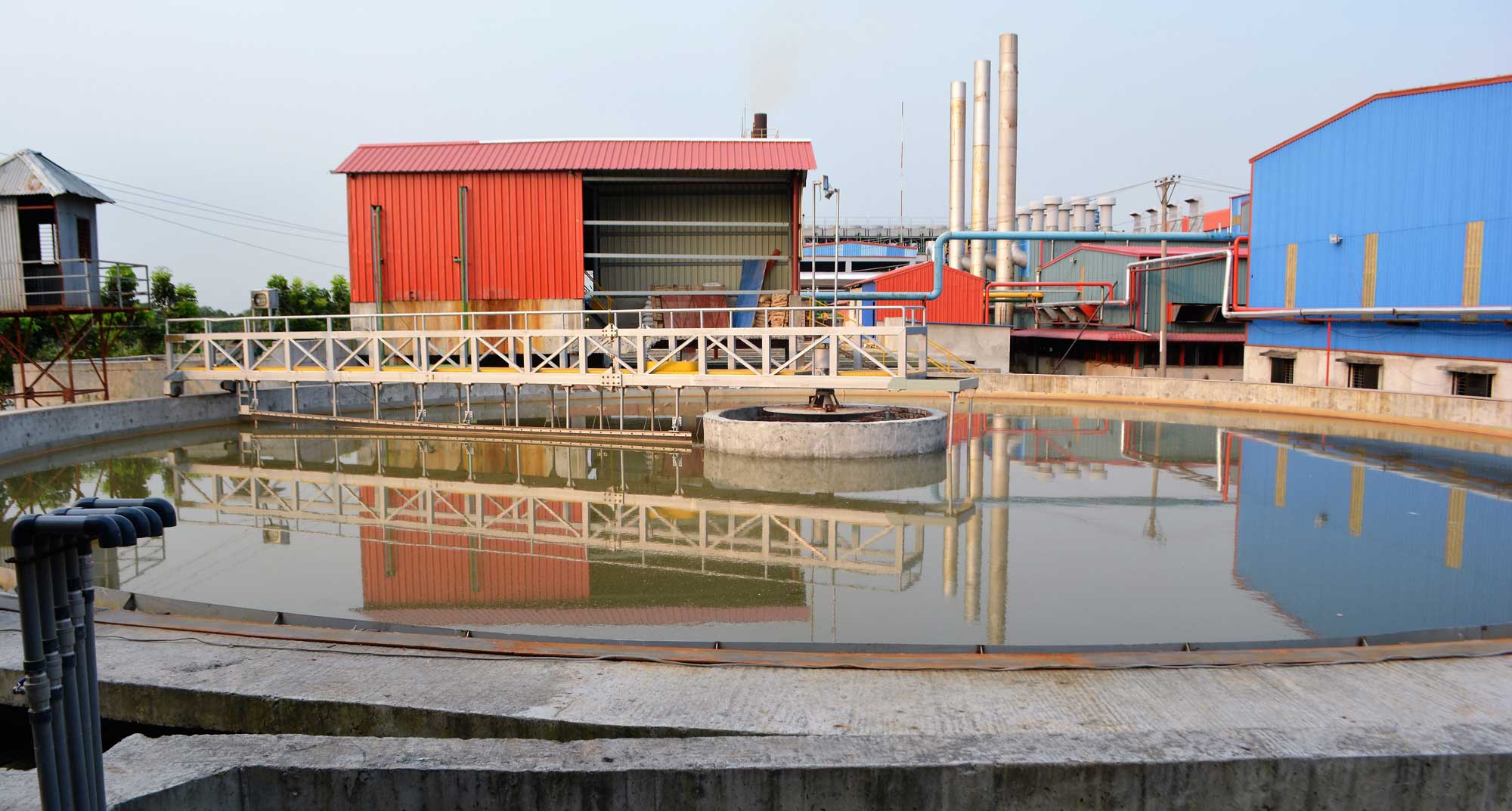
| Factory drainage and ETP | Collection and transfer sumps ahead of an ETP | Solids, temperature and chemicals in the effluent |
| Fishery, dairy, piggery, animal husbandry | Manure, wash water and fecal sewage sumps | Fibres and straw, which raise clog risk |
| Fecal sewage tanks | Emptying and transferring tank contents | Float switch settings and pipe size |
| Other sumps and treatment systems | General sewage and sump treatment duty | Pump curve against your head |
- STP
- ETP
- Building Sewage
- Factory Drainage
- Fishery
- Dairy Farm
- Piggery
- Fecal Tank
How to Size a Submersible Sewage Pump
Two numbers matter most: how much you pump and how high you lift it.
The Formula
- Shaft power (kW) = flow (m³/h) × total head (m) ÷ 367 ÷ pump efficiency
- Total head is the lift height plus pipe friction and fitting losses
- Sewage pumps often run at lower efficiency than clean-water pumps
- Pick a motor above the shaft power and check the pump curve
Worked Example
- Flow 30 m³/h at a total head of 15 m, with 50% pump efficiency
- 30 × 15 ÷ 367 = about 1.23 kW of hydraulic power
- 1.23 ÷ 0.5 = about 2.45 kW at the pump shaft
- A 3.7 kW (5 HP) motor leaves a margin. Confirm on the pump curve
Example only. Efficiency varies by model and duty point. Send us your flow, lift height and pipe length and our engineers will size the pump.
Sewage Pump Station Best Practice
A good pump in a poor sump still fails. These points protect pump life.
- Use a duty and a standby pump so one can be serviced without stopping the station
- Size the wet well so the pump does not start more often per hour than the maker allows
- Set the stop float above the pump inlet and keep the pump fully submerged during operation
- Keep wet well retention short, since long storage causes odor and septic sewage
- Use guide rails or a lifting chain so a pump can be removed without emptying the sump
- Design the discharge pipe for a cleansing velocity, often about 0.6 m/s or more, so solids do not settle
How to Choose a Sewage Pump Supplier in Bangladesh
Many pump listings in Bangladesh show only horsepower and price. Ask these questions before you buy.
- Flow and total head. Ask for the pump curve, not only HP.
- Solids and fibres. Describe the sewage. Rags, straw and sand change the right impeller.
- Seal and motor protection. Check the seal type, IP rating and what happens on overload.
- Voltage and phase. Match the pump to your supply, single or three phase.
- Control and support. Ask about float switches, panels, installation and spares.
Frequently Asked Questions
What is the EF series, and who makes it?
The EF series is a range of non-clog submersible sewage pumps, from 0.5 to 15 HP, supplied in Bangladesh by Techno Bangla Creation. Several manufacturers use "EF" as a model prefix, so compare the maker, the full model number and the datasheet rather than the two letters alone.
What head can I expect from an EF pump on Bangladesh's 50 Hz supply?
Bangladesh's mains frequency is 50 Hz, where the EF series is rated to a maximum head of 34 m. The 40 m figure applies only to 60 Hz. Head falls as flow rises, so read your duty point from the pump curve of the exact model, and send us your flow and total head so we can match one.
Can I run an EF pump on single-phase power?
Up to a point. Single-phase supply (110 or 220 to 240 V) is listed for the 1/2 to 2 HP models, roughly 0.37 to 1.5 kW. Larger pumps need three-phase supply, and every EF model is available in three-phase (220, 380, 415 or 440 V). Check your site supply before choosing a size.
Why does my sewage pump keep tripping on overload?
The usual causes are low supply voltage, a clogged or fibre-wrapped impeller, or a discharge line that is blocked or closed. The EF motor overload protector is designed to cut power in these situations to protect the winding. Do not keep resetting it: check the voltage, clear the impeller and inspect the discharge valve first, and call us if the trips continue.
Do I need the auto float switch?
For an unattended sump, yes. The float starts and stops the pump with the water level, so nobody has to watch it, and when its stop level is set above the pump inlet it helps keep the pump submerged. For a duty and standby pair, a control panel that alternates the pumps is a better partner. Tell us your sump layout and we will suggest the controls.
Can the EF series pump factory effluent from an ETP?
It can for ordinary wastewater sumps and transfer pits. If the effluent carries strong chemicals, heat or abrasive grit, confirm the wetted materials and maximum liquid temperature first. Note that class F rates the motor insulation to about 155 degrees C, not the liquid. Send us the effluent details and we will check the match.
How do I stop an EF pump from failing at the seal?
Pull it on a regular schedule and check the cable, the impeller for wrapped fibres and the seal condition, following the interval in the model's manual. A well-designed wet well with short retention time and a pump that stays submerged during operation also reduces stress on the seal. Guide rails or a lifting chain make inspection quick instead of a pit-emptying job.
What decides the price of an EF series sewage pump in Bangladesh?
Power rating (0.5 to 15 HP), single or three phase, the seal option (standard or silicon carbide), a float switch or control panel, and whether you need a duty and standby pair all move the price. A drainage pump priced by horsepower alone is not a like-for-like comparison with a non-clog IP68 pump that has a double seal and overload protection. Send your flow, head and voltage for a free quotation.