BCST Turbine Flow Meter Supplier in Bangladesh
Diesel. Light oil. Deionized water. Some clean liquids slip past electromagnetic meters because they don’t conduct. BCST liquid turbine meters count every turn of a small rotor and convert it into flow rate and total, with pulse or 4–20 mA output ready for your PLC.
What Is a BCST Turbine Flow Meter?
A BCST turbine flow meter is a liquid flow meter from BCST Group (China) that measures flow with a spinning rotor and a magnetic pickup. It suits clean, low-viscosity liquids such as diesel, light oil and deionized water (below 50 × 10⁻⁶ m²/s), in sizes DN15 to DN200 with 0.5% linear accuracy over a 10:1 range. Techno Bangla Creation supplies it in Bangladesh.
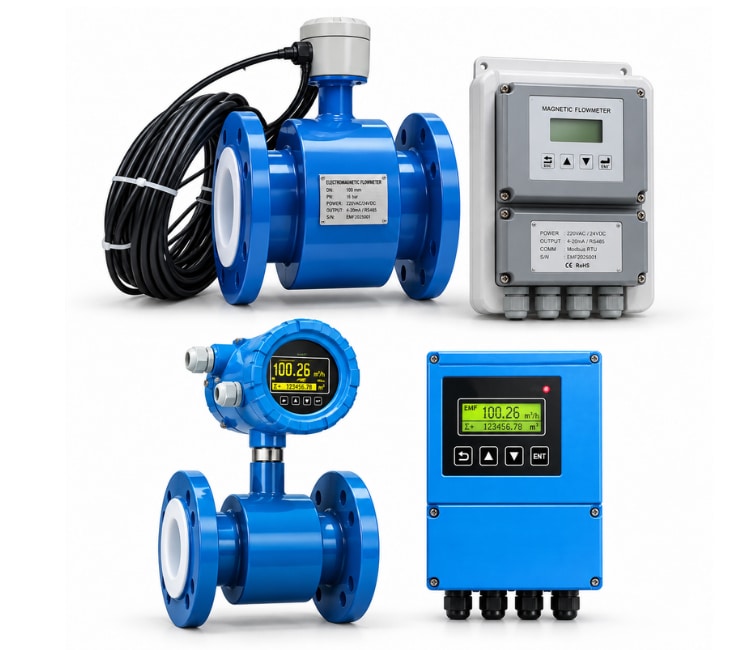
A turbine meter works best on clean, low-viscosity liquids. For dirty water or effluent, use an electromagnetic flow meter. For gas lines, see our turbine gas flow meter.
- Good accuracy on clean liquids at moderate cost
- Flange connection for larger pipes and thread connection for small pipes
- Pulse output suits totalizers, batching and PLC systems
- Installation and after-sales support in Bangladesh
BCST Turbine Flow Meter Specifications
- Type
- Liquid turbine flow meter (rotor and magnetic pickup)
- Pipe size
- DN15 ~ DN200 (flange connection for larger sizes, thread connection for small sizes)
- Accuracy
- 0.5% linear accuracy over a 10:1 flow range (series value, model dependent)
- Signal output
- Pulse signal, with 4-20 mA available by model
- Suitable liquid
- Clean liquid, free of fibre and particles, not corrosive to stainless steel
- Viscosity limit
- Kinematic viscosity below 50 × 10-6 m2/s
- Brand
- BCST
- Origin
- China
Figures come from the BCST turbine flow meter series. Flow range, accuracy, pressure rating, material and display depend on the model and size you select. Send us your liquid, pipe size and flow rate and our engineers will confirm the right model.
How a Turbine Flow Meter Works
- Liquid Enters the MeterClean liquid flows through the meter body and past the rotor blades.
- Rotor SpinsThe moving liquid pushes the blades. Rotor speed rises in step with flow speed.
- Pickup Counts BladesA magnetic pickup outside the body senses each blade passing and makes one pulse.
- Transmitter Converts PulsesThe pulse rate becomes a flow rate and the pulse count becomes total volume.
- Signal Goes to Your SystemA pulse or 4-20 mA signal feeds a display, totalizer, batching unit or PLC.
Key Benefits
For clean liquids, a turbine meter gives good accuracy at a moderate price.
- High accuracy on clean liquids, with 0.5% linear accuracy quoted for the BCST series over a 10:1 range
- Compact, light body that is easy to fit in an existing line
- Suits low flow rates, where some meter types struggle
- Pulse output works well with totalizers, batching controllers and PLC systems
- Stainless steel construction for clean water and non-corrosive liquids
- Local supply, installation and after-sales support from Techno Bangla
Is a Turbine Flow Meter Right for You?
Choose a Turbine Meter When
- The liquid is clean and thin, like treated water, diesel or light oil
- You need good accuracy for billing, batching or stock control
- You can fit a strainer upstream and keep the pipe full
- The line has enough straight pipe for steady flow
- You accept periodic bearing checks
Choose Another Meter When
- The liquid is wastewater, sludge or slurry. Use an electromagnetic meter
- The liquid is thick, like heavy oil. Use an oval gear meter
- The line carries steam or gas. See the vortex flow meter
- Air bubbles are common in the liquid
Where Turbine Flow Meters Are Used
Clean liquid lines where you need an accurate flow rate and total.
- Treated Water
- Boiler Feed Water
- Cooling Tower Make-up
- WTP Outlet
- Diesel and Light Oil
- Clean Chemical Lines
- Batching and Filling
- Textile and RMG Factories
How to Choose the Right Turbine Flow Meter
Share these details with our engineers and we will recommend a suitable model.
- Liquid and cleanliness. State the liquid, its viscosity, temperature and whether it carries solids or fibre. Fit a strainer upstream, because particles damage the rotor and bearings.
- Flow range, not just pipe size. Match the meter to your real minimum and maximum flow. Oversizing is a common mistake, and the meter then reads poorly at low flow.
- Straight pipe. Allow about 10 pipe diameters upstream and 5 downstream, or use a flow straightener. Elbows and valves close to the meter disturb the flow.
- Full pipe, no air. Keep the meter full with some back-pressure. Air in the liquid causes errors and can damage the rotor, so use an air eliminator where needed.
- Output and display. Choose pulse, 4-20 mA or a local display to match your PLC or totalizer. Some models have no local indication, so confirm.
Frequently Asked Questions
What is a turbine flow meter?
A turbine flow meter measures liquid flow with a rotor placed in the pipe. The flowing liquid spins the rotor, and a pickup counts the blades to give a pulse signal proportional to flow. It shows flow rate and total volume and works best on clean, low-viscosity liquids.
What liquids can a BCST turbine flow meter measure?
BCST states its liquid turbine meters suit clean liquids that are not corrosive to stainless steel, free of fibre and particles, with kinematic viscosity below 50 × 10-6 m2/s. That covers water, diesel and many light oils. Check your liquid with our engineers before ordering.
How accurate is a turbine flow meter?
BCST quotes 0.5% linear accuracy over a 10:1 flow range for its turbine series. Other makers report 0.5 to 1.5% of reading, with liquid meters better than gas meters. Real accuracy depends on clean liquid, correct flow range, straight pipe and calibration. Confirm the figure for your model.
How much straight pipe does a turbine meter need?
Most makers advise about 10 pipe diameters of straight pipe upstream and 5 downstream. A strainer upstream is also recommended. Elbows, valves and pumps close to the meter distort the flow and cause errors. If space is short, a flow straightener can help, so ask our engineers.
What is the turndown range of a BCST turbine meter?
The standard range is about 10:1. BCST also lists 15:1 and 20:1 depending on the model. Pick the meter so your normal flow sits well inside the range, not near the minimum.
Does a turbine flow meter need power?
Yes, in most versions. BCST lists 12 to 24 V DC for the pulse sensor and 24 V DC for the 4–20 mA transmitter. The LCD version can use a lithium battery for its display.
Does a turbine flow meter need maintenance?
Yes. The rotor turns on bearings that wear, especially with high velocity, dirty or non-lubricating liquid. Keep a strainer clean, avoid overspeed, inspect the rotor on schedule and recalibrate when readings drift. Repair kits are normally available for turbine meters. Ask us about service and spare parts.
How can I get a quotation for a BCST turbine flow meter?
Send your liquid, pipe size, flow range, pressure and required output to our engineers by phone or email. We reply with a free quotation for your ETP, WTP, STP or flow measurement needs, including installation and after-sales support in Bangladesh.