BCST Motor Drive Pump Supplier in Bangladesh
Dose coagulant, caustic or hypochlorite at a steady, measured rate, hour after hour. The BCST motor drive pump uses a motor, a worm gear and a diaphragm to push a set volume with every stroke, with Techno Bangla’s selection help, installation and after-sales support in Bangladesh.

What Is a Motor Drive Pump?
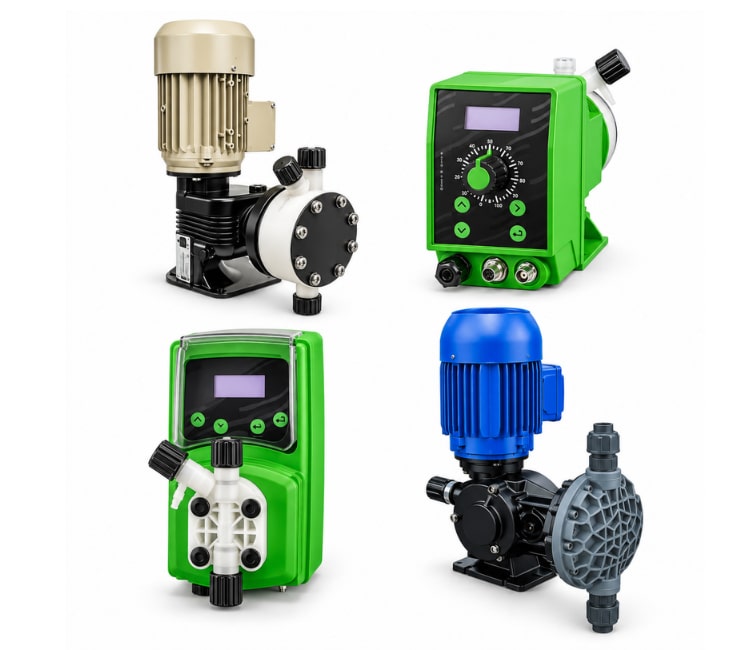
A BCST motor drive pump is a motor-driven diaphragm metering pump. An electric motor and cam move a diaphragm, so each stroke delivers a set volume of chemical, adjusted by stroke length and motor speed. Techno Bangla Creation supplies BCST pumps in Bangladesh for ETP, WTP and STP dosing.
It meters chemical, it does not simply move liquid. To empty drums, see our drum and container pump. For very small doses, see the solenoid models on our chemical dosing pump page.
- Electric motor drive for steady, continuous dosing
- Flow set by stroke length and motor speed
- Suits acids, caustic, hypochlorite and coagulants with the right materials
- Installation and after-sales support in Bangladesh
Motor Drive Pump Specifications
- Type
- Motor-driven diaphragm metering (dosing) pump
- Brand
- BCST
- Origin
- China
- Application
- Chemical dosing in ETP, WTP and STP
- Flow, pressure, motor power, voltage
- Depends on the model. Send your duty point and we confirm the datasheet
- Head, diaphragm, valve and seal materials
- Depends on the model and the chemical. Confirm on the datasheet
- Dosing accuracy (rule of thumb)
- About ±1 to ±2% for well-installed motor-driven diaphragm pumps
- Suction lift (rule of thumb)
- Keep to about 1.2 m (4 ft) or less. Flooded suction is preferred
The last two rows are general engineering guides for metering pumps, not BCST ratings. Exact flow, pressure, accuracy and materials depend on the model you select, so we confirm them from your chemical, flow and back pressure.
How a Motor-Driven Dosing Pump Works
- Motor TurnsAn electric motor runs, and a worm gear steps its speed down.
- Cam Makes a StrokeA cam turns the rotation into a straight back-and-forth stroke that moves a push rod.
- Diaphragm Draws InOn the suction stroke the diaphragm pulls back and chemical enters through the suction check valve.
- Diaphragm Pushes OutOn the discharge stroke the diaphragm pushes a fixed volume out through the discharge check valve.
- You Set the DoseStroke length sets the volume per stroke and motor speed sets strokes per minute. A calibration column checks the real flow.
Key Benefits
Accurate dosing saves chemical and keeps treatment steady.
- Handles larger flows than solenoid pumps, so one pump can feed a whole ETP or WTP stream
- Steady, accurate dosing at about ±1 to ±2% when installed with proper back pressure
- Diaphragm keeps the chemical away from the motor and gearbox
- Head, diaphragm and valve materials can be matched to acids, caustic, hypochlorite and coagulants
- Flow set by stroke length and motor speed, and on some models by a 4 to 20 mA signal
- Local engineering and after-sales support from Techno Bangla
Is a Motor Drive Pump Right for You?
Choose a Motor Drive Pump When
- You dose chemical steadily, hour after hour
- Your flow is above what a small solenoid pump can give
- You want to set flow by stroke length and motor speed
- The pump will run for long periods without supervision
- You can fit a back pressure valve and a calibration column
Choose Another Pump When
- You need very small doses or pH trim. See the solenoid models on our chemical dosing pump page
- You only need to empty a drum. See our drum pump
- The liquid is sludge or slurry. See the air operated diaphragm pump
- You need very high pressure, where a hydraulic diaphragm or plunger pump fits better
- Your chemical is too hot or too aggressive for the available head materials
Where Motor-Driven Dosing Pumps Are Used
Any plant that adds chemical to water or effluent in measured amounts.
- ETP pH Correction
- Coagulant Dosing
- Sodium Hypochlorite Disinfection
- WTP Chemical Feed
- STP Chemical Dosing
- Antiscalant Dosing
- Cooling Tower Water Treatment
- Textile and Dyeing Plants
How to Choose the Right Motor Drive Pump
Share these details with our engineers and we will recommend a suitable model and accessories.
- Flow and back pressure. Give the dose in L/h and the pressure at the injection point. A metering pump delivers a different flow at a different pressure, so we size and calibrate it at your real pressure.
- Chemical and wetted parts. Give the chemical name, strength and temperature. PVC and PP suit many water-treatment chemicals, PVDF suits strong acids, and 316L stainless steel suits solvents but not hydrochloric acid. Check the diaphragm, valve balls and seals too.
- Suction side. Keep suction lift to about 1.2 m (4 ft) or less and use flooded suction where you can. Add a suction strainer of about 40 to 60 mesh to protect the check valves.
- Discharge side. Fit a back pressure valve, which steadies the flow and stops siphoning from a tank. Add a relief valve, a pulsation dampener and a calibration column.
- Control and power. Tell us your power supply, single or three phase. Ask about a variable speed drive or 4 to 20 mA control, and an explosion-proof motor where needed.
Frequently Asked Questions
What is a BCST motor drive pump?
It is a motor-driven diaphragm metering pump from BCST, a Chinese metering pump maker. An electric motor and cam move the diaphragm, so each stroke delivers a set volume. Techno Bangla supplies it for ETP, WTP and STP dosing in Bangladesh.
Is a motor drive pump the same as a metering pump or a dosing pump?
Yes, they are different names for the same pump family. “Metering pump” and “dosing pump” describe the job, while “motor drive” describes the mechanical drive. A solenoid-driven pump does the same job at smaller flows.
How much does a BCST motor drive pump cost in Bangladesh?
Price depends on flow, pressure, materials, motor and controls, so there is no single figure. Other brands’ motor-driven pumps list from about ৳55,000 to ৳1,25,000 or more, depending on size. Send your chemical, dose and back pressure for an exact quotation.
Can I run a motor drive pump against a closed discharge valve?
No. It pushes a fixed volume on every stroke, so a closed valve builds pressure until something fails. Fit a relief valve on the discharge line, and never block the line while the pump runs.
Why does my pump lose prime when dosing sodium hypochlorite?
Hypochlorite releases gas, and the gas can collect in the pump head and stop flow. Use flooded suction, a short suction line and a degassing arrangement where the model allows. Confirm the options on the datasheet.
Why is my pump dosing less than the stroke setting?
Common causes are a clogged suction strainer, worn or dirty check valves, air in the head, or a worn diaphragm. Dosing too much can mean low back pressure, which allows siphoning. Check the strainer and valves first, then recalibrate.
Which power supply do I need for a motor drive pump in Bangladesh?
Larger motor-driven pumps are commonly three-phase 380–415 V at 50 Hz, with small single-phase options on some models. Many sites add a variable speed drive or 4–20 mA control. Tell us your supply and we confirm the motor.
How do I adjust and calibrate the dose?
Set the stroke length for volume per stroke and the motor speed for strokes per minute. Then check the real flow with a calibration column at your actual back pressure. Recalibrate whenever the chemical, pressure or tank level changes.